
Why Is My Business Not Showing Up in ChatGPT or Google AI Mode? 15 Reasons and Fixes
You ask ChatGPT to recommend businesses in your industry, but your company is not mentioned.
You search for your services in Google AI Mode, but competitors appear instead.
You publish helpful articles, yet none of them seem to be cited in AI-generated answers.
It is understandable to assume that one technical setting, missing file, or special piece of schema is responsible.
The reality is usually more complicated.
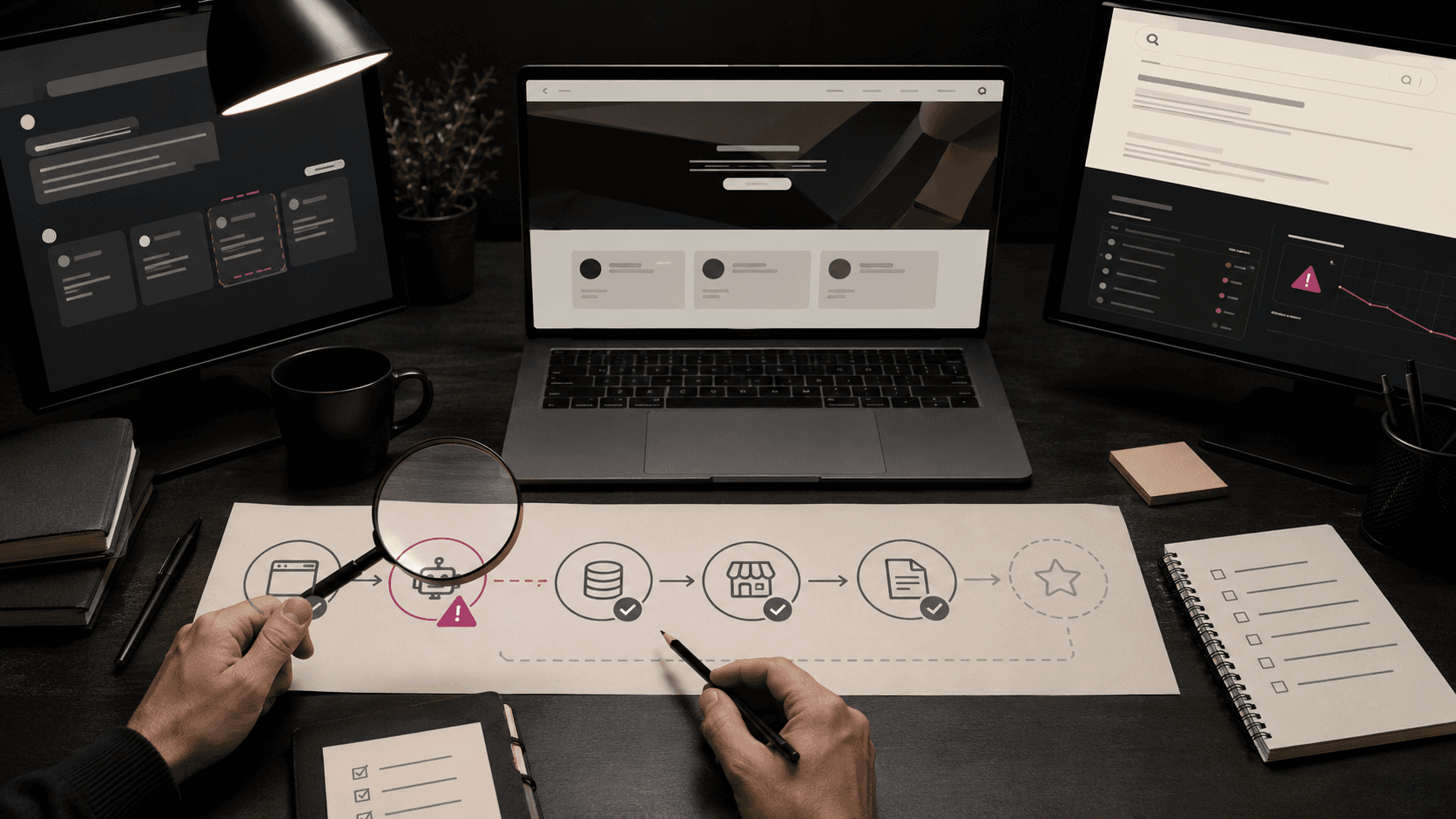
AI-search visibility depends on a chain of conditions:
- The platform must be able to access the page.
- The page must be eligible for retrieval or search visibility.
- The system must understand what the page and business represent.
- The information must be relevant to the specific question.
- The source must offer enough value and trust to be selected.
- The platform must decide that including the source improves that particular response.
A problem at any stage can reduce visibility.
Even when every stage works correctly, no business is guaranteed to appear for every prompt. Generative systems combine sources differently according to the platform, question, location, model, available index, and time.
The goal is therefore not to force a mention.
It is to remove preventable barriers and give search systems clear, accurate, useful, and verifiable information they can confidently use.
The Quick Answer
Your business may not be appearing in ChatGPT or Google AI search because:
- The website or important page is not indexed.
- OAI-SearchBot, Googlebot, or another relevant crawler is blocked.
- A
noindex,nosnippet, or canonical setting limits eligibility. - The page returns an error or important content does not render properly.
- The website does not clearly explain the business, services, audience, or location.
- Important services do not have useful dedicated pages.
- The content repeats information already available everywhere.
- The site provides little first-hand evidence or original insight.
- Business information is inconsistent across the web.
- Local or product information is incomplete.
- The business has limited reputation signals beyond its own website.
- The content does not answer the complete conversational question.
- Too many low-value AI-generated pages weaken the content library.
- The query does not trigger an AI feature or does not require your type of source.
- The testing method creates unrealistic expectations.
Fix technical eligibility first. Then improve business clarity, content usefulness, original proof, external consistency, and measurement.
First, Define What “Not Showing Up” Means
AI visibility is not one result type.
A business can be absent in one situation and visible in another.
Your Brand Is Missing From a Branded Search
If someone searches your exact business name and the system cannot identify the official website or describe the company accurately, the problem may involve indexing, entity clarity, inconsistent profiles, or limited public information.
Your Business Is Missing From a Category Recommendation
If someone asks for a web design studio, property adviser, clinic, or another business category, the system must decide which available companies are relevant and trustworthy for that specific request.
This is more competitive than a branded search.
Your Page Is Not Cited
A platform may understand your business without citing the website in a particular answer.
The response may not require a source from your site, or another page may explain the requested fact more directly.
Google Does Not Show an AI Overview
AI Overviews are not triggered for every query.
Google states that these features appear when its systems determine they add value beyond ordinary search results. The absence of an AI Overview does not mean your website has an AI-optimization problem.
Results Change Between Tests
Generative responses may vary according to:
- Exact wording.
- Follow-up context.
- User location.
- Language.
- Personalization.
- Model version.
- Available sources.
- Date and time.
One test is not a permanent ranking report.
How Eligibility Differs Between ChatGPT and Google
ChatGPT Search
OpenAI documents OAI-SearchBot as the crawler used to surface websites in ChatGPT's search features.
Sites that opt out of OAI-SearchBot will not be shown in ChatGPT search answers, although they may still appear as navigational links in some situations.
OpenAI recommends allowing OAI-SearchBot in robots.txt and allowing requests from its published IP ranges. Review the current OpenAI crawler documentation before changing crawler rules.
OAI-SearchBot is separate from GPTBot.
- OAI-SearchBot relates to ChatGPT search visibility.
- GPTBot relates to the potential use of content in training OpenAI's generative AI foundation models.
A website can allow OAI-SearchBot while making a separate decision about GPTBot.
Allowing the search crawler makes the site eligible for discovery. It does not guarantee selection, citation, or recommendation.
Google AI Overviews and AI Mode
Google states that a page must be indexed and eligible to appear in ordinary Google Search with a snippet before it can appear as a supporting link in AI Overviews or AI Mode.
There are no separate technical requirements or special AI schema required for inclusion. See Google's official AI features and your website guidance.
This means a page with a basic Google indexing problem also has a Google AI visibility problem.
1. Your Website or Page Is Not Indexed
A page cannot support Google AI features if it is not in Google's search index and eligible for a snippet.
Common indexing issues include:
- The website is new and has not been discovered.
- The page has no internal links.
- The XML sitemap is missing or outdated.
- The server frequently returns an error.
- Google selected another URL as canonical.
- The page is considered a duplicate.
- A
noindexdirective is present. - The content offers too little distinct value.
How to Check
Use Google Search Console's URL Inspection tool.
Check:
- Whether the URL is indexed.
- Whether crawling is allowed.
- Which canonical Google selected.
- When the page was last crawled.
- Whether the rendered page contains the important content.
- Whether indexing directives were detected.
Google's Search Console guide explains how URL Inspection can diagnose page-level indexing issues and test a live URL.
How to Fix It
- Correct the reported technical issue.
- Add the page to the XML sitemap when appropriate.
- Link to it from relevant indexed pages.
- Confirm it provides unique and useful information.
- Request indexing once after a meaningful fix.
Repeatedly requesting indexing does not make crawling happen faster. Google documents quotas and recommends using the request after important changes, not as a daily button. See requesting a recrawl.
2. Relevant Crawlers Are Blocked
A crawler may be blocked by:
robots.txt.- A firewall.
- A CDN rule.
- Bot-protection software.
- Rate limiting.
- Geographic restrictions.
- A hosting security policy.
- An incorrect user-agent rule.
It is possible to allow general visitors while blocking automated retrieval.
How to Check
- Review the live
robots.txtfile. - Inspect server and CDN logs.
- Compare blocked requests with official crawler IP ranges.
- Test whether the public URL loads without authentication.
- Review recent security-rule changes.
Do not allow a crawler based only on a claimed user-agent name. User-agent strings can be copied. Use the platform's current verification guidance and published IP information.
How to Fix It
Allow the specific crawler only when visibility on that service matches the business's policy.
Avoid removing all bot protection globally. The objective is controlled access for legitimate crawlers, not unrestricted access for every automated request.
3. A Noindex, Nosnippet, or Canonical Setting Limits Visibility
Small configuration changes can remove a page from consideration.
Noindex
A noindex directive tells Google not to include the page in Search. Google confirms that a page carrying this instruction is removed from search results after it is crawled. Review the official noindex guidance.
This setting is sometimes left behind after:
- Moving from staging to production.
- Installing an SEO plugin.
- Copying a page template.
- Launching a redesigned site.
- Changing environment variables.
Nosnippet
Google requires a page to be eligible for a snippet before it can appear as a supporting link in its generative AI features.
nosnippet, max-snippet, and data-nosnippet settings influence what Google can show from the page. Review Google's robots meta specifications before using them.
Canonical URLs
If several URLs contain similar content, Google may select one canonical version.
The page you are testing may not be the version Google considers primary.
Check canonical tags, redirects, internal links, and sitemap URLs. Google's canonicalization guidance explains the supported signals.
4. Important Content Is Hidden or Does Not Render Properly
A visually complete page can still provide little accessible information to a crawler.
Problems may include:
- Content available only after a click.
- Information loaded from a failing API.
- Client-side rendering errors.
- Text drawn inside a canvas.
- Important copy embedded only inside images.
- A page that requires login or consent before displaying content.
- Different mobile and desktop content.
- A server response that looks successful but contains an error page.
How to Fix It
- Inspect the rendered page in Search Console.
- Test important pages with JavaScript disabled as a diagnostic step.
- Keep essential business and service information in semantic HTML text.
- Use proper headings, links, lists, and form labels.
- Add descriptive alternative text to meaningful images.
- Confirm mobile visitors and crawlers receive the complete primary content.
This improves accessibility as well as search visibility.
5. Your Website Does Not Clearly Explain the Business
Many websites use attractive but vague introductions.
For example:
We create innovative experiences that transform the future.
This does not identify:
- The business type.
- The actual services.
- The intended customer.
- The location or service area.
- The reason the company is relevant.
A clearer introduction would state the company name, category, main services, audience, and market directly.
For MM Creative Studio, that might mean explaining that it is a web design, web development, and branding studio serving businesses in the UAE and international markets.
How to Fix It
Review the homepage, About page, service pages, contact page, and footer.
Make sure they consistently answer:
- What is the official business name?
- What does the company provide?
- Who is it for?
- Where does it operate?
- What makes the company credible?
- How can a potential customer make contact?
Clarity is not keyword stuffing. It is accurate communication.
6. Important Services Do Not Have Useful Dedicated Pages
A homepage paragraph listing five services may not provide enough information for a detailed recommendation or comparison.
Each important service should usually have a dedicated page when customers need distinct information about it.
A useful service page can explain:
- What the service includes.
- Who it is designed for.
- Which problems it solves.
- The process.
- Relevant examples.
- Limitations and tradeoffs.
- Frequently asked questions.
- The next step.
Avoid creating near-identical service pages for every slight keyword or location variation.
The objective is distinct usefulness, not page volume.
7. Your Content Is Too Generic
Generative systems can summarize common information from many sources.
If your article repeats the same definitions and tips found across hundreds of websites, it gives the system little reason to select that particular page.
Google's current generative AI optimization guidance recommends creating valuable, non-commodity content.
How to Add Distinct Value
Include:
- A real project example.
- An original opinion supported by experience.
- A measured result.
- A screenshot from the working process.
- A comparison based on actual requirements.
- A mistake your team learned from.
- An original photograph or video.
- A tool, checklist, template, or framework.
- An explanation of when common advice does not apply.
AI can help structure this material. It cannot invent genuine business experience.
8. The Website Provides Little First-Hand Proof
A business can claim experience without demonstrating it.
Useful proof may include:
- Case studies.
- Portfolio projects.
- Before-and-after examples.
- Client outcomes.
- Testimonials that can be verified.
- Named authors or reviewers.
- Process photographs.
- Original research.
- Technical documentation.
- Public work credited by clients or partners.
Proof helps customers evaluate the business and gives search systems information that generic summaries cannot replace.
Do not invent case studies, reviews, authors, awards, or results to appear more authoritative.
9. Business Information Is Inconsistent Across the Web
One source may list an old company name. Another may use a different website. Social profiles may describe different services or locations.
These conflicts make it harder to establish a reliable understanding of the business.
Review
- Official website.
- Google Business Profile.
- Professional social profiles.
- Industry directories.
- Portfolio platforms.
- Business registrations that are publicly relevant.
- Client credits.
- Press coverage.
Use the same official name, primary URL, main description, contact details, and location information where appropriate.
Consistency does not require copying the same paragraph everywhere. The underlying facts should agree.
10. Your Local or Product Information Is Incomplete
For local businesses, AI recommendations may depend on accurate information about location, service area, hours, category, reviews, and services.
For products, important information may include price, availability, specifications, images, delivery, and returns.
How to Fix Local Information
- Claim and verify an eligible Google Business Profile.
- Select accurate categories.
- Maintain opening hours.
- Add real services and photographs.
- Keep the website URL and phone number current.
- Respond appropriately to genuine reviews.
- Use a legitimate address or service area.
How to Fix Product Information
- Maintain accurate product pages.
- Use Merchant Center when appropriate.
- Synchronize availability and pricing.
- Provide useful specifications.
- Add high-quality images.
- Implement eligible product structured data accurately.
Do not create fake locations, reviews, stock, or prices.
11. The Business Has Limited Reputation Beyond Its Own Website
Your website explains what you say about your company.
Other credible sources can provide independent context.
Depending on the industry, useful signals may include:
- Genuine customer reviews.
- Client websites crediting your work.
- Relevant directory profiles.
- Professional memberships.
- Interviews.
- Conference participation.
- Specialist publications.
- Local media.
- Earned links.
- Public project collaborations.
The aim is not to manufacture mentions for AI systems.
Build a reputation that helps real customers verify the company.
12. Your Content Does Not Answer the Complete Conversational Question
Traditional keyword research may focus on a short phrase such as:
web designer UAE
A conversational search may be much more specific:
I operate a UAE service business with several offers and need a fast website that can grow later. Should I use a template, AI builder, or custom Next.js site?
The user needs more than a keyword match.
They need information about:
- Business complexity.
- Budget.
- Timeline.
- Customization.
- SEO.
- Maintenance.
- Integrations.
- Future growth.
- Tradeoffs.
How to Fix It
- Publish complete comparison and decision content.
- Address important follow-up questions.
- Explain limitations honestly.
- Connect educational content to detailed service pages.
- Begin sections with a direct answer, then provide supporting context.
Do not create one thin page for every possible prompt variation.
13. The Site Contains Too Much Low-Value AI Content
AI makes publishing easy, but review and maintenance still require real capacity.
A site filled with repetitive, inaccurate, or search-first articles can weaken the usefulness of the content library.
Google warns that using generative AI to produce many pages without adding value may violate its scaled-content abuse policy. Review Google's guidance on generative AI content.
How to Fix It
Audit existing pages and decide whether to:
- Improve them with original material.
- Combine overlapping pages.
- Redirect outdated duplicates.
- Remove unsupported claims.
- Exclude unfinished pages from search.
- Delete only when the page cannot be made useful and has no suitable replacement.
Publish at the pace your team can research, verify, edit, and maintain.
14. The Query Does Not Trigger the Result You Expect
Not every question produces:
- A ChatGPT web search.
- A Google AI Overview.
- A Google AI Mode citation from your industry.
- A local recommendation.
- A link to an external source.
The system may answer from established knowledge, decide ordinary search results are sufficient, or determine that another source type is more relevant.
The business may also be outside the requested location, price range, category, or qualification.
How to Test More Realistically
Use different stages of the customer journey:
- Branded: What does this business provide?
- Category: Which businesses provide this service in this market?
- Problem: How should a business solve this specific problem?
- Comparison: Which option fits these requirements?
- Evidence: What examples or sources support this recommendation?
Record the result, platform, date, language, location, and exact wording.
15. Your Measurement Method Is Misleading
Repeatedly asking the same prompt until the business appears is not a useful measurement method.
Neither is testing only one phrase from one account.
Better Measurement
Combine:
- Google Search Console.
- The Generative AI performance report when available.
- Website analytics.
- AI referral traffic.
- A consistent prompt set.
- Brand-accuracy checks.
- Citation tracking.
- Enquiries and conversions.
Google launched a dedicated Generative AI performance report in Search Console in 2026. Availability began with a subset of properties, so it may not yet appear for every website.
Visibility is useful, but qualified business outcomes matter more than the number of times a brand name appears in a manual test.
A Step-by-Step Diagnostic Process
Phase 1: Confirm Technical Eligibility
- Inspect important URLs in Google Search Console.
- Confirm indexing and snippet eligibility.
- Review
robots.txt. - Check OAI-SearchBot access.
- Review
noindex,nosnippet, and canonical settings. - Confirm pages return successful server responses.
- Inspect rendered content.
- Review firewall and CDN logs.
Do not move to content theories while the page remains technically inaccessible.
Phase 2: Confirm Business Clarity
Review whether the website clearly states:
- Business name.
- Business category.
- Main services.
- Intended customers.
- Industries served.
- Location or service area.
- Official contact paths.
- Relevant expertise.
Check whether these details agree across public profiles.
Phase 3: Evaluate Content Usefulness
For every important page, ask:
- Does it answer a real customer need?
- Does it provide a direct initial answer?
- Does it include original information?
- Are important claims supported?
- Does it explain limitations?
- Is it substantially different from other pages on the site?
- Would a customer still find it useful without becoming a lead?
Phase 4: Strengthen Evidence and Authority
Add:
- Case studies.
- Project screenshots.
- Original images.
- Named expertise.
- Measured outcomes.
- Reliable sources.
- Genuine external references.
- Current reviews.
Phase 5: Measure Over Time
Create a baseline before making major changes.
Track:
- Indexed pages.
- Search impressions and clicks.
- Generative AI visibility when available.
- AI referrals.
- Brand accuracy.
- Qualified enquiries.
- Conversion quality.
Meaningful changes may require recrawling and reassessment. Do not promise or expect immediate inclusion.
A Practical 30-Day Improvement Plan
Week 1: Fix Access and Indexing
- Audit
robots.txt. - Review OAI-SearchBot access.
- Inspect primary pages in Search Console.
- Remove accidental
noindexdirectives. - Correct canonical and redirect problems.
- Repair server and rendering errors.
- Update the XML sitemap.
Week 2: Clarify the Business
- Rewrite vague homepage messaging.
- Improve About and Contact pages.
- Create or strengthen important service pages.
- Synchronize business details across profiles.
- Update eligible Google Business Profile information.
Week 3: Add Useful Answers and Proof
- Identify common customer questions.
- Improve one substantial decision guide.
- Add one case study or project breakdown.
- Include original screenshots or photographs.
- Cite authoritative sources for important claims.
- Connect related pages with internal links.
Week 4: Establish Measurement
- Configure analytics for AI referrals.
- Check for the Search Console Generative AI report.
- Create a controlled prompt-testing sheet.
- Record current brand accuracy and citations.
- Measure enquiries from improved landing pages.
- Set a realistic review schedule.
What Not to Do
Do Not Create Hundreds of Prompt Pages
One comprehensive article can answer several connected questions. Creating thin pages for every wording variation can produce duplication and scaled-content risk.
Do Not Purchase Fake Reviews or Mentions
Artificial reputation signals can mislead customers and violate platform policies.
Do Not Add Unsupported Schema
Structured data should describe information that is accurate and visible on the page. There is no special schema that guarantees an AI citation.
Do Not Depend on llms.txt for Google Visibility
Google states that it does not use llms.txt for Google Search or its generative AI features. Its current generative AI optimization guidance explains that no new AI text file or special machine-readable format is required.
Other platforms may develop their own support, but the file is not a replacement for crawlability, indexing, useful content, or authority.
Do Not Rewrite Everything for Robots
Clear headings and direct answers help people and retrieval systems, but the page should still read naturally and provide complete context.
Do Not Expect Guaranteed Placement
No agency, tool, or technical setting can guarantee that an independent AI platform will cite or recommend a business.
How MM Creative Studio Diagnoses AI Visibility
At MM Creative Studio, we do not begin by adding an AI file or generating more articles.
We review the complete visibility chain:
- Crawl access.
- Indexing.
- Rendering.
- Website architecture.
- Service-page clarity.
- Business identity.
- Content usefulness.
- First-hand proof.
- Structured information.
- External consistency.
- Reputation.
- Measurement.
- Conversion journeys.
The objective is not simply to make a brand name appear in one generated answer.
It is to create a trustworthy digital presence that customers and search systems can understand across Google, ChatGPT Search, referrals, social platforms, and direct visits.
Final Thoughts
If your business is not showing up in ChatGPT or Google AI Mode, do not begin with a shortcut.
Start with eligibility:
- Can the relevant crawler access the site?
- Is the page indexed and eligible?
- Is important content visible and technically reliable?
Then move to understanding and trust:
- Does the website clearly explain the business?
- Does it answer the customer's complete question?
- Does it contain original proof?
- Are public details consistent?
- Is there credible information beyond the company's own claims?
Finally, measure the right outcome.
An AI mention can increase awareness, but it is only valuable when the information is accurate and the resulting journey helps the right customer take the next step.
Start a Project With MM Creative Studio
Frequently Asked Questions
How Do I Get My Business Listed in ChatGPT?
There is no universal submission form that guarantees placement in ChatGPT answers.
For ChatGPT Search eligibility, review OAI-SearchBot access, publish accessible and useful public content, clarify the business, and build trustworthy information across the web.
Why Does ChatGPT Mention My Competitor but Not My Business?
The competitor may have clearer service information, stronger public evidence, more relevant content, better crawler access, or a longer-established reputation.
The result may also vary between prompts and sessions. Compare the underlying public information instead of assuming one hidden ranking factor is responsible.
Does Allowing OAI-SearchBot Guarantee a Citation?
No.
Allowing the crawler can make public pages eligible for ChatGPT search discovery, but OpenAI does not guarantee that the website will be selected, linked, or recommended.
Why Am I Not Appearing in Google AI Mode?
First confirm that the relevant page is indexed and eligible to appear in Google Search with a snippet.
Then review relevance, content quality, business clarity, original evidence, and whether the query actually requires an AI Mode source from your site.
Do I Need Special AI Schema?
No universal AI schema guarantees visibility.
Use supported structured data accurately when it matches visible page content and an eligible Google search feature.
Will llms.txt Make My Business Appear?
Not in Google Search. Google states that it ignores llms.txt for Search, AI Overviews, and AI Mode.
It also does not replace OAI-SearchBot access or strong public content for ChatGPT Search.
How Long Will It Take to Appear?
There is no fixed timeline.
Technical changes require recrawling. Content, reputation, and external consistency may take longer to develop. Even a well-optimized page is not guaranteed inclusion for a specific prompt.
Can a New Business Appear in AI Search?
Yes, but a new business usually has less public information and fewer reputation signals.
Begin with a technically accessible website, clear service pages, accurate business profiles, original proof, and useful content. Build visibility steadily instead of manufacturing signals.
Should I Pay an Agency That Guarantees AI Rankings?
Be cautious.
Independent platforms control their own retrieval and response systems. A provider can improve technical eligibility, content, authority, and measurement, but cannot guarantee a specific citation or recommendation.
Related Reading
- How to Get Your Business Found in ChatGPT, Gemini, and Google AI Mode in 2026
- SEO vs AEO vs GEO: What Is the Difference and Which Does Your Business Need in 2026?
- Can AI-Generated Content Hurt SEO? What Businesses Need to Know in 2026
- AI Website Builder vs Professional Web Designer: Which Should Your Business Choose?
- Is Vibe Coding Safe for a Business Website? Benefits, Risks, and Limitations
- Landing Page vs Website: Which Is Right for Your Business?